
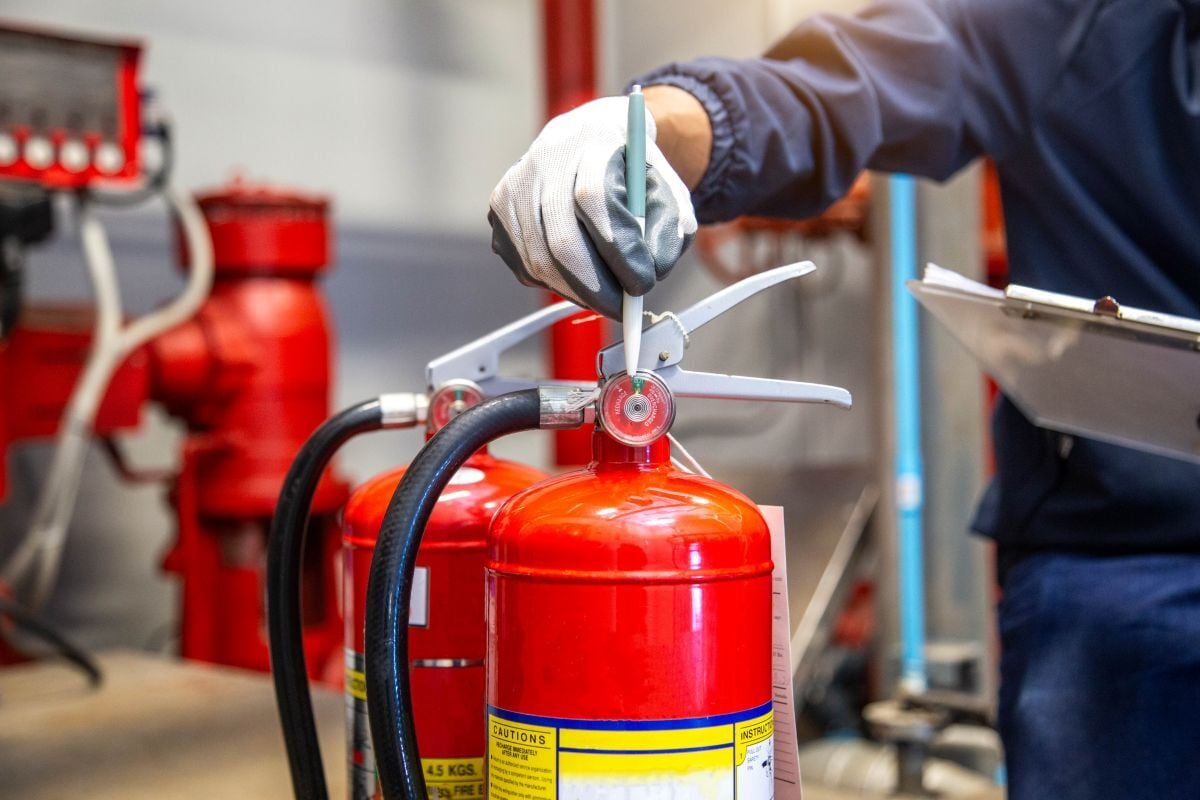
Fire extinguishers are one of the most essential—and often overlooked—safety tools in any workplace or facility. But just like any piece of safety equipment, extinguishers have a defined lifecycle. From the moment they’re purchased to the day they’re retired or recycled, every stage requires attention to ensure reliability, compliance, and environmental responsibility.
Let’s walk through the full lifecycle of a fire extinguisher so you know when to recharge, replace, or dispose of them safely.

1. Purchase: Selecting the Right Extinguisher
The first step is choosing the right extinguisher for your environment:
- Class A: For ordinary combustibles like wood, paper, and cloth.
- Class B: For flammable liquids such as gasoline or oil.
- Class C: For electrical fires.
- Class D: For combustible metals.
- Class K: For commercial kitchen grease fires.
Many workplaces use ABC multi-purpose extinguishers, but specialty areas (labs, data centers, kitchens, EV charging stations) may need additional types.
Pro Tip: Check NFPA 10 requirements and local codes when making your purchase decision.
2. Inspection: Monthly Visual Checks
Once installed, extinguishers need monthly inspections by staff or a designated safety officer. Look for:
- Is the gauge in the green?
- Is the safety pin and tamper seal intact?
- Is the label legible and facing outward?
- Is the extinguisher accessible (not blocked or buried)?
Document inspections to stay compliant with OSHA and insurance requirements.
3. Maintenance: Annual Professional Service
Every extinguisher requires a yearly inspection by a licensed professional. They will:
- Check for corrosion, leaks, or damage.
- Weigh the extinguisher for loss of pressure or agent.
- Replace damaged parts or seals.
- Update the inspection tag.
This step keeps you compliant with NFPA 10 and ensures your extinguisher will work when you need it most.
4. Recharge: After Every Use (Even Partial)
Many people don’t realize that even one quick burst discharges pressure, making the extinguisher unreliable until it’s recharged.
- Recharge immediately after any use.
- Only use licensed fire protection companies for recharging.
- Keep a spare extinguisher on hand while one is out for service.
5. Hydrostatic Testing: Pressure Integrity Checks
Extinguishers undergo hydrostatic testing at specific intervals to confirm the cylinder’s strength:
- Water, CO₂, and wet chemical extinguishers: every 5 years.
- Dry chemical extinguishers: every 12 years.
Extinguishers that fail the test must be retired.
6. Retirement: Knowing When to Replace
Signs an extinguisher should be retired:
- Expired hydrostatic test date.
- Visible damage, rust, or leaking.
- Missing or illegible label.
- Outdated or obsolete type (e.g., halon extinguishers, which are now restricted for environmental reasons).
Typical lifespan: 10–12 years for most extinguishers, though proper maintenance can extend this.
7. Disposal: Recycling and Environmental Considerations
Fire extinguishers can’t just be tossed in the trash—they’re pressurized and often contain chemicals. Safe disposal options include:
- Local Fire Protection Companies: Many offer recycling or safe disposal services.
- Hazardous Waste Facilities: Cities often host drop-off programs.
- Metal Recycling Centers: Empty, depressurized cylinders may be recycled as scrap steel.
Halon extinguishers, once common in data centers, must be disposed of under EPA guidelines due to their environmental impact.
8. Legal & Compliance Factors
- OSHA: Requires employers to maintain readily accessible extinguishers in working condition.
- NFPA 10: Sets the national standard for inspection, testing, and maintenance.
- EPA: Regulates disposal of certain chemical agents.
Failure to comply can result in fines, liability in lawsuits, or invalidated insurance claims.
9. Real-World Example: Logistics Warehouse
A logistics company neglected annual servicing for its extinguishers. During a small equipment fire, one extinguisher failed due to internal corrosion. The result: $60,000 in damage that could have been prevented with a properly serviced unit.
Conclusion
Fire extinguishers are not “buy it and forget it” equipment. From purchase through disposal, every stage of their lifecycle requires care, compliance, and professional support. By inspecting, recharging, testing, and recycling properly, you not only protect lives and property but also meet legal and environmental responsibilities.
Need help managing your fire extinguisher lifecycle? Koorsen Fire & Security offers inspections, recharging, hydrostatic testing, and environmentally safe disposal. Contact us today to keep your safety program in full compliance.