
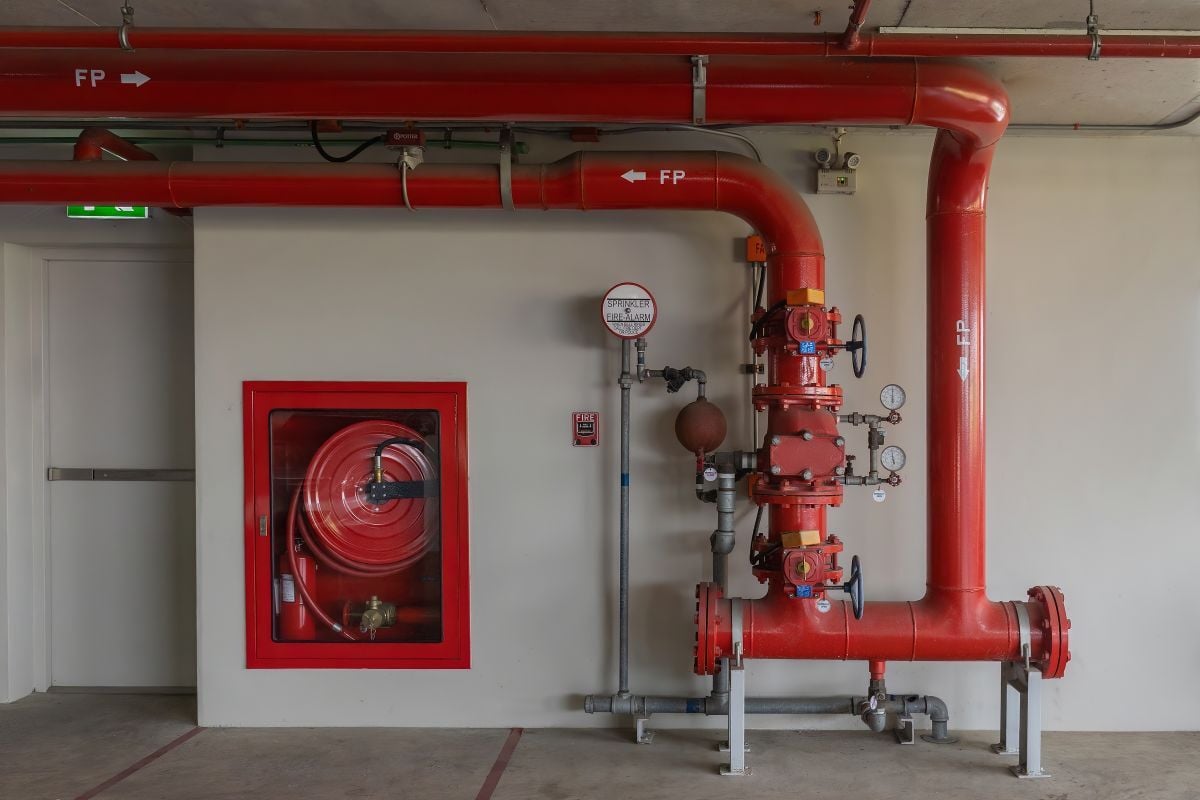
A fire suppression system is only as reliable as its maintenance, inspections, and testing. Regular checks ensure that sprinklers, clean agents, CO₂, and wet chemical systems operate properly in an emergency and remain NFPA compliant.
This guide simplifies NFPA inspection requirements into a step-by-step schedule, helping facility managers, safety officers, and building owners stay compliant and protect lives and property.

1. Why Inspections and Testing Matter
Neglecting fire suppression inspections can lead to:
- Malfunctioning systems during a fire.
- Increased risk of property damage or business interruption.
- Violations of NFPA 25 (water-based systems) or NFPA 2001 (clean agents), resulting in fines.
- Potential insurance claim denials after a fire.
Key takeaway: Regular inspection and testing keep systems operational, compliant, and ready to protect your facility.
2. Weekly & Monthly Checks
Visual Inspection & Quick Checks
- Inspect system components: Ensure control panels are powered, no physical damage to tanks or piping, and gauges show proper pressure.
- Check accessibility: Make sure valves, pull stations, and nozzles are unobstructed.
- Report anomalies immediately: Any leaks, corrosion, or damage should be logged and repaired.
Frequency:
- Weekly: Quick visual inspection of system readiness.
- Monthly: More detailed visual checks, including hangers, signs, and gauges.
Tip: Keep a logbook or digital record for compliance verification.
3. Quarterly and Semi-Annual Testing
Water-Based Systems
- Trip tests: Inspect mechanical devices like pressure switches, pumps, and valves.
- Alarm testing: Ensure fire alarms trigger when the suppression system activates.
- Piping & sprinkler inspection: Look for obstructions, corrosion, or physical damage.
Clean Agent & CO₂ Systems
- Agent level checks: Confirm tanks are full and pressure readings are correct.
- Discharge nozzle inspection: Ensure nozzles are unobstructed and properly aligned.
- Control panel test: Verify system connectivity to alarms and monitoring systems.
Tip: Schedule professional inspections for quarterly/semi-annual tasks to meet NFPA requirements.
4. Annual Inspection & Testing
NFPA 25 / NFPA 2001 Annual Requirements
- Full system audit: Test every component, including tanks, valves, piping, nozzles, and detection devices.
- Flow tests: Confirm water-based systems deliver proper pressure and volume.
- Agent discharge simulations: For clean agent and CO₂ systems, verify detection and release mechanisms (without full discharge if possible).
- Documentation review: Ensure all previous inspections, maintenance, and repairs are logged.
Benefit: Annual inspections ensure systems remain fully operational, compliant, and ready for emergencies.
5. Five-Year & Extended Interval Maintenance
- Internal pipe inspections: For water-based systems, check for corrosion or debris that could block flow.
- Agent replacement or recharge: Certain clean agents may require periodic recharge.
- Major component replacement: Valves, nozzles, or pumps may need replacement to maintain reliability.
Tip: Follow manufacturer recommendations and NFPA guidance for long-term maintenance intervals.
6. Best Practices for Facility Managers
- Create a maintenance schedule: Include weekly, monthly, quarterly, annual, and long-term inspections.
- Use certified contractors: NFPA-compliant inspections often require licensed professionals.
- Document everything: Keep logs, photos, and reports for compliance audits and insurance purposes.
- Train staff: Make sure employees can identify system issues and report them promptly.
- Integrate with fire alarms: Ensure suppression system inspections are coordinated with alarm and detection testing.
7. Real-World Example: Warehouse Compliance
A warehouse storing high-value electronics implemented a strict inspection schedule:
- Weekly visual checks ensured no obstructions to sprinklers or suppression nozzles.
- Quarterly pressure tests identified a partially clogged sprinkler line, which was repaired before it could fail.
- Annual clean agent inspection confirmed NOVEC 1230 tanks were at full pressure.
Outcome: The system was fully operational when a small electrical fire occurred, preventing damage to inventory and avoiding downtime.
8. Key Takeaways
- Consistency is critical: Inspections are not optional; skipping them jeopardizes safety and compliance.
- Follow NFPA schedules: Weekly, monthly, quarterly, annual, and extended interval tasks each have a purpose.
- Documentation protects your business: Logs demonstrate compliance, protect insurance claims, and reduce liability.
- Professional oversight ensures reliability: Certified contractors know how to spot hidden issues before they become emergencies.
Conclusion
Regular inspection and testing of fire suppression systems are essential to protecting people, property, and business operations. By following NFPA guidelines and implementing a clear schedule, facility managers can maintain system reliability, regulatory compliance, and peace of mind.
Koorsen Fire & Security provides complete inspection, testing, and maintenance programs for all types of fire suppression systems. Contact us today to ensure your systems are compliant and ready to respond when it matters most.