
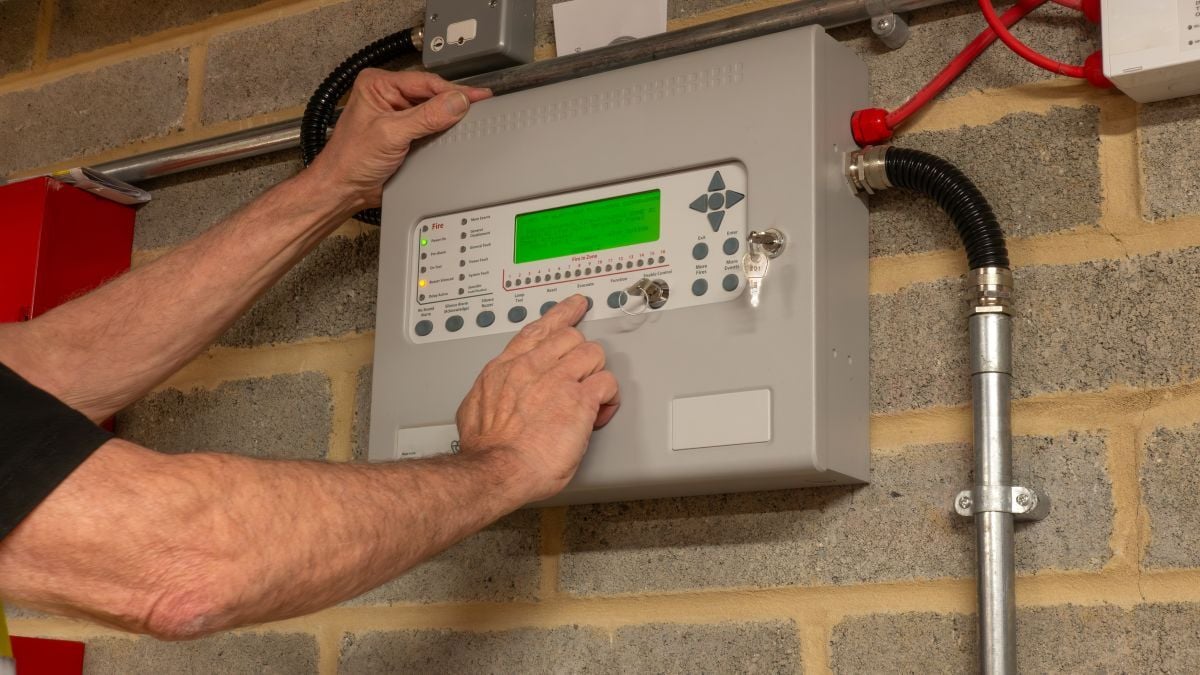
Ensuring your fire alarm system functions properly requires regular testing. NFPA 72 sets clear testing intervals to maintain compliance, protect occupants, and prevent system failures. For facility managers, property owners, and compliance officers, understanding what needs testing and when is critical.
This guide breaks down fire alarm testing frequency, step by step, so you can maintain a safe, code-compliant facility.

1. Daily Fire Alarm Checks
Daily checks are generally visual inspections rather than functional tests:
- Control panel status: Ensure no trouble or supervisory signals are present.
- Indicator lights: Confirm all LEDs, LCDs, or display panels show normal operation.
- Power supply: Verify main power and battery indicators are active.
Purpose: Quick verification that the system is operational and ready to respond in an emergency.
2. Weekly Fire Alarm Tests
Weekly tests typically include basic audible and signal checks:
- Alarm devices: Activate one or more horns, bells, or strobes to confirm proper operation.
- Notification circuits: Ensure all devices in the system can be heard/seen throughout the building.
- Trouble signals: Verify that the system reports any wiring or device issues promptly.
Note: Some facilities use a rotating schedule, testing different zones weekly to minimize disruption.
3. Monthly Fire Alarm Tests
Monthly tests are more detailed and involve functional testing of system components:
- Initiating devices: Test manual pull stations, smoke detectors, heat detectors, and other triggers.
- Control equipment: Ensure panels properly process signals and communicate with monitoring services.
- Battery and backup systems: Inspect battery status and backup power circuits.
Benefit: Identifies potential issues before they affect system performance and ensures NFPA 72 compliance.
4. Annual Fire Alarm Inspections
Annual inspections are comprehensive and usually conducted by certified professionals:
- Full device testing: Every smoke detector, heat detector, pull station, horn, strobe, and control device is tested.
- System calibration: Adjust sensitivity and functionality to ensure reliable detection.
- Documentation: Complete NFPA 72-compliant inspection reports for records, audits, and insurance purposes.
- Code review: Verify system meets current local codes and NFPA 72 standards.
Tip: Professional inspections often uncover hidden issues, such as deteriorating wiring, outdated panels, or low battery capacity.
5. Special Considerations
- High-risk areas: Kitchens, mechanical rooms, or industrial facilities may require more frequent testing.
- New or modified systems: Any installation, upgrade, or modification triggers additional verification.
- Remote or connected systems: IoT-enabled alarms may allow for automated alerts and remote testing, reducing manual effort.
6. Consequences of Skipping Tests
Failing to maintain a regular testing schedule can result in:
- Increased risk of system failure during a fire
- Violations of NFPA 72 and local fire codes
- Fines or failed inspections
- Higher insurance premiums or claim disputes
Example: A facility skipped monthly testing, and a single smoke detector malfunctioned during a minor fire. Evacuation was delayed, causing property damage and insurance complications.
7. Best Practices for Compliance Managers
- Maintain a testing log for daily, weekly, monthly, and annual activities.
- Rotate device testing to minimize building disruption.
- Schedule annual inspections with certified NFPA professionals.
- Train staff on recognizing trouble signals and reporting issues promptly.
- Review NFPA 72 annually for updates to testing requirements.
Conclusion
Regular fire alarm testing ensures your system is ready to respond when it matters most. By following NFPA 72 intervals—daily, weekly, monthly, and annual—you protect occupants, maintain compliance, and reduce the risk of costly failures. A proactive testing schedule is a cornerstone of effective facility safety management.
Koorsen Fire & Security can help design and implement a comprehensive fire alarm testing program tailored to your facility, ensuring NFPA 72 compliance and maximum protection. Contact Koorsen today to schedule your inspection!