
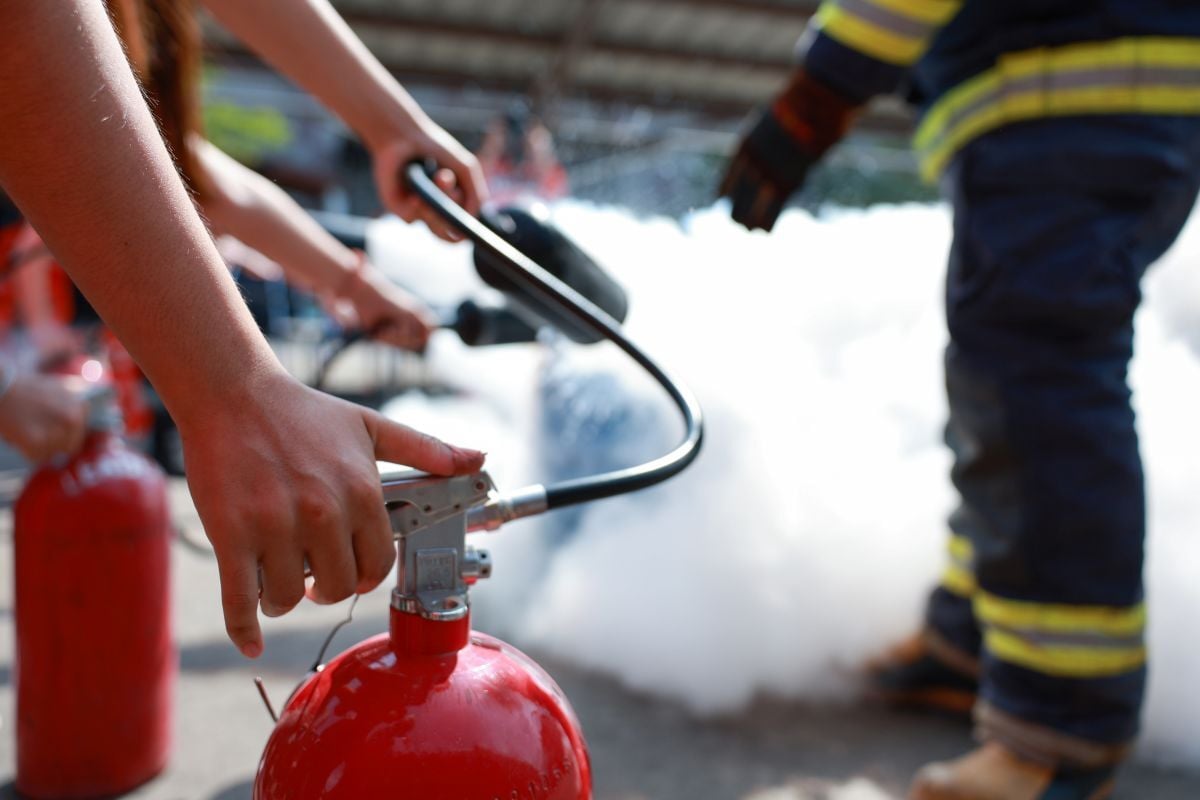
When fire strikes, seconds count. Fire extinguishers may be available, but if employees don’t know how to use them, that equipment won’t help. A structured training program ensures your workforce is ready, confident, and compliant with safety regulations. Here’s a step-by-step guide for HR and safety managers.

1. Recognize Why Training is Essential
- Meets OSHA’s legal requirement for employee education.
- Empowers staff to stop small fires before they spread.
- Boosts employee confidence during emergencies.
- Increase employee safety.
- Reduces liability for your business.
2. Understand the Standards (OSHA & NFPA)
- OSHA (29 CFR 1910.157): Requires training at hire and annually after.
- NFPA 10: Emphasizes hands-on practice with fire extinguishers and simulated fires.
- Local fire codes: May add extra requirements depending on your jurisdiction.
Failing to comply risks fines, penalties, and greater liability if a fire occurs.
3. Decide Who Should Be Trained
- All employees: Common in office, retail, and healthcare settings.
- Designated responders only: Typical in industrial or high-risk facilities.
- High-risk departments: Kitchens, labs, warehouses, and areas with flammable materials.
4. Build a Structured Training Program
A well-rounded program includes:
- Classroom instruction: Fire classes, fire extinguisher types, and PASS technique.
- When not to fight fires: Evacuation should always be the priority if the fire is too large or spreading.
- Hands-on practice: Using live-fire props, training extinguishers, or digital simulators.
5. Set Training Frequency
- At hire: New employees must receive fire extinguisher education.
- Annually: OSHA requires yearly refreshers.
- As needed: After equipment upgrades, new hazards, or a fire incident.
6. Choose the Right Training Tools
- Training extinguishers: Rechargeable or non-chemical practice units.
- Live-fire scenarios: Controlled flames for realism.
- Digital training simulators: Clean and safe for office settings.
- Supporting materials: Videos, signage, and handouts to reinforce learning.
7. Document the Training Process
Keep written records including:
- Employee rosters and signatures.
- Training dates.
- Trainer qualifications.
- Assessments or feedback forms.
Proper documentation helps with OSHA inspections and liability protection.
Conclusion: Confidence in Action
Building a fire extinguisher training program ensures employees are not only compliant but capable of responding safely when seconds matter most. Partner with Koorsen Fire & Security to deliver customized training programs for your workforce.